pool exercises for lower back pain pdf

Aquatic therapy offers a gentle, low-impact approach to managing lower back discomfort. Utilizing water’s buoyancy reduces stress on joints,
facilitating movement and strengthening crucial muscle groups.
These exercises, detailed in resources like Physiopedia and ScienceDirect, are particularly effective for individuals seeking self-management strategies
and those transitioning from short-term physiotherapy to ongoing wellness.
Water-based routines can significantly improve muscle activity, minimize pain, and promote long-term back health, as evidenced by the WATER study;
Understanding the Benefits of Aquatic Therapy
Aquatic therapy leverages the unique properties of water to provide a therapeutic environment for individuals experiencing lower back pain. The buoyancy of water significantly reduces the impact of gravity on the spine, joints, and muscles, allowing for a greater range of motion with less pain. This diminished weight-bearing aspect is particularly beneficial for those with conditions that exacerbate discomfort with traditional land-based exercises.
Furthermore, water provides gentle resistance, which aids in strengthening core muscles, back extensors, and abdominal muscles – all vital for spinal stability and support. The hydrostatic pressure of the water also helps to reduce swelling and inflammation, promoting faster healing and pain relief.
Studies, such as the WATER study highlighted on ScienceDirect, demonstrate that aquatic exercises often result in minimal pain occurrence and intensity. This makes it an ideal option for individuals who find land-based exercise too challenging or painful initially. The warm water temperature can also soothe muscles and improve circulation, enhancing the overall therapeutic effect.
Why Pool Exercises are Effective for Back Pain
Pool exercises excel in back pain management due to a confluence of physical properties. Water’s buoyancy counteracts gravity, unloading stress on the spine and allowing freer movement, crucial for individuals limited by pain. This reduced compression facilitates muscle activation without exacerbating discomfort.
The inherent resistance of water provides a natural strengthening component, targeting key muscle groups like the gluteus maximus, medius, erector spinae, multifidus, rectus abdominis, and obliques – all vital for spinal support and stability. The ScienceDirect research emphasizes the effectiveness of hip abduction/adduction, squats, and back floating leg movements in activating these muscles.
Moreover, hydrostatic pressure aids in reducing edema and inflammation, contributing to pain reduction. Aquatic therapy, as noted by Physiopedia, empowers patients to self-manage their condition through accessible pool programs. This approach is particularly valuable for transitioning from acute care to long-term wellness, fostering independence and sustained improvement.
Assessment and Preparation
Prior to starting, diagnostically triage your condition following international back pain guidelines. Ensure proper pool water chemistry, focusing on FC/CYA balance, for a safe experience.
Review safety precautions and consider individual limitations before commencing any aquatic exercise routine for lower back pain.
Diagnostically Triaging Your Condition
Before initiating any pool exercise program for lower back pain, a thorough assessment is crucial. As recommended by international back pain guidelines, diagnostically triaging your condition helps determine the appropriate exercise selection and intensity.
This process involves a careful examination to identify potential red flags – serious underlying conditions requiring medical attention before commencing exercise. Consider factors like pain location, radiation, neurological symptoms (weakness, numbness), and bowel/bladder dysfunction.
Differentiating between mechanical back pain (muscle strain, ligament sprain) and more serious conditions like spinal stenosis or disc herniation is vital. Mechanical pain typically improves with movement, while more severe conditions may worsen.
A healthcare professional can perform a physical examination, including range of motion testing, neurological assessment, and palpation, to accurately diagnose the source of your pain. Self-diagnosis can be misleading, so professional guidance is highly recommended.
Understanding your specific condition ensures you choose exercises that are both effective and safe, minimizing the risk of exacerbating your symptoms.
Pool Water Chemistry Basics
Maintaining proper pool water chemistry is paramount for a safe and effective aquatic exercise experience. Balanced water protects both your health and the pool’s equipment, ensuring a comfortable environment for therapeutic exercise.
Key parameters include pH, alkalinity, calcium hardness, and sanitizer levels (typically chlorine or bromine). Ideal pH ranges between 7.2 and 7.8, while alkalinity should be 80-120 ppm. Proper calcium hardness prevents corrosion or scaling.
Sanitizer, like Free Chlorine (FC), eliminates bacteria and algae. PoolMath, a widely-used calculator, helps determine the correct chemical dosages based on pool volume and current levels. Maintaining adequate FC is crucial, especially if ammonia is present.

Ammonia, potentially entering the pool from various sources, requires significantly higher FC levels for conversion – approximately 10 times the ammonia concentration. Neglecting this can lead to unpleasant odors and reduced water quality.
Regular testing, ideally several times a week, is essential. Consistent monitoring and adjustment ensure optimal water chemistry for a beneficial and hygienic exercise session.
Safety Precautions Before Starting
Prioritizing safety is crucial before commencing any pool exercise program for lower back pain. A diagnostically triaged condition, as recommended by international back pain guidelines, is the first step – understand your limitations.
Always consult with a healthcare professional or qualified aquatic therapist before starting. They can tailor exercises to your specific needs and ensure they are appropriate for your condition. Begin slowly and gradually increase intensity and duration.
Warm-up thoroughly before each session with gentle movements to prepare your muscles. Pay attention to your body and stop immediately if you experience any sharp or increasing pain.
Ensure the pool area is clear of obstacles and has adequate lighting. Use caution when entering and exiting the pool, utilizing handrails if available. Consider using flotation devices for added support, especially during initial stages.
Stay hydrated by drinking water before, during, and after exercise. Be mindful of other pool users and maintain a safe distance. Listen to your body and respect its limits.

Effective Pool Exercises
Targeted movements like hip abduction/adduction, squats, and back floating leg lifts demonstrably increase muscle activity. These exercises strengthen core and back muscles,
reducing pain and improving stability.
Water walking and jogging provide cardiovascular benefits with minimal impact, while core strengthening routines enhance overall support and posture.
Hip Abduction/Adduction & Flexion/Extension
These exercises, highlighted in the WATER study as particularly effective, focus on strengthening the gluteus maximus and medius muscles. Begin by standing in chest-deep water, holding onto the pool wall for balance if needed.
For abduction/adduction, slowly move one leg out to the side (abduction) and then back towards the midline (adduction). Repeat 10-15 times per leg. Maintain a controlled motion, avoiding any sudden movements.
Flexion and extension involve moving the leg forward (flexion) and backward (extension) while keeping the knee relatively straight. Again, perform 10-15 repetitions per leg.
The water’s resistance provides a natural challenge, enhancing muscle engagement without placing excessive stress on the lower back. Focus on maintaining good posture throughout the exercises, keeping your core engaged and your back straight.
These movements are crucial for stabilizing the pelvis and supporting the lower back, contributing to pain reduction and improved functional mobility.
Squat Exercises for Back Extensors
Squat exercises in the water are exceptionally beneficial for strengthening the back extensors – the erector spinae and multifidus muscles – vital for spinal stability. Begin in chest-deep water, feet shoulder-width apart, and hold onto the pool wall for support if necessary.
Slowly lower your body as if sitting back into a chair, keeping your back straight and core engaged. Only descend to a comfortable depth, avoiding any pain. The water’s buoyancy reduces impact on the joints, allowing for a greater range of motion.

Focus on maintaining proper form throughout the exercise. Avoid rounding your back or letting your knees cave inward. Perform 10-15 repetitions, gradually increasing the depth of the squat as your strength improves.
The resistance provided by the water challenges the back extensors, promoting muscle growth and endurance. These exercises are particularly effective, as noted in the WATER study, for improving back strength and reducing pain.
Remember to breathe consistently throughout the movement and listen to your body, stopping if you experience any discomfort.
Back Floating Leg Movements for Abdominals
Back floating leg movements are a superb way to engage and strengthen the abdominal muscles – rectus abdominis, external and internal obliques – while minimizing stress on the lower back. Begin by gently floating on your back in chest-deep water, utilizing a flotation device if needed for support.
Keep your core engaged and your lower back pressed firmly against the water’s surface. Slowly lift one leg towards the ceiling, keeping it straight or slightly bent. Lower the leg back down with control, and repeat on the other side.
For increased challenge, perform small, controlled circular motions with your legs. These movements activate the abdominal muscles and improve core stability. The buoyancy of the water assists in reducing spinal compression.
As highlighted in the WATER study, these exercises are particularly effective when combined with support buoyancy equipment. Aim for 10-15 repetitions per leg, focusing on maintaining proper form and controlled movements.
Breathe deeply throughout the exercise, and stop if you experience any pain or discomfort.
Water Walking and Jogging
Water walking and jogging provide excellent cardiovascular benefits while being incredibly gentle on the lower back. The buoyancy of the water significantly reduces impact, making it ideal for individuals with back pain. Begin in chest-deep water, maintaining good posture with your core engaged.
Start with walking, focusing on a natural gait and arm movement. Gradually increase your speed and stride length as comfort allows. For a greater challenge, progress to water jogging, lifting your knees higher and incorporating arm movements similar to running.
The resistance of the water naturally strengthens leg muscles and improves core stability, contributing to better back support. Vary your intensity and duration to suit your fitness level.
Consider using water weights or a drag buoy for added resistance and to further enhance muscle engagement. Remember to maintain a controlled pace and avoid overexertion.
Aim for 20-30 minutes of water walking or jogging, several times a week, as part of a comprehensive exercise program.
Core Strengthening Exercises in Water
A strong core is fundamental to supporting the lower back and preventing pain. Water provides a unique environment for safely strengthening these muscles. Begin with water planks, holding a plank position against the pool wall, focusing on engaging your abdominal muscles.
Next, try water bicycle crunches, lying on your back and mimicking a bicycle motion with your legs while keeping your core engaged. Utilize the water’s resistance to increase the challenge.
Another effective exercise is the water dead bug, lying on your back and slowly extending opposite arm and leg while maintaining core stability. Support buoyancy equipment can be used for added assistance.
Remember to perform these exercises slowly and with controlled movements, focusing on proper form over speed. The water’s resistance will naturally increase the intensity.
Aim for 2-3 sets of 10-15 repetitions of each exercise, gradually increasing the number of sets and repetitions as your strength improves.
Specific Exercise Routines
Progressive routines cater to varying fitness levels, starting with beginner-friendly exercises and advancing to more challenging movements.
These routines incorporate hip, leg, and core exercises, building strength and stability for effective pain management and long-term wellness.
Beginner-Level Routine
This routine focuses on gentle movements to acclimate to the aquatic environment and build a foundation of strength; Begin with 5 minutes of water walking, focusing on a comfortable pace and depth – chest to waist high is ideal. Follow this with back floating leg movements, performing 10-15 repetitions, concentrating on engaging abdominal muscles for stability.
Next, perform hip abduction/adduction exercises, gently moving legs out to the side and back in, 10-12 repetitions per leg. Then, introduce hip flexion/extension, lifting knees towards the chest and extending legs back, also 10-12 repetitions per leg.
Finally, incorporate modified squat exercises, keeping squats shallow and focusing on maintaining a straight back. Aim for 8-10 repetitions. Remember to listen to your body and stop if you experience any pain. This entire routine should take approximately 20-25 minutes, including warm-up and cool-down periods.
Intermediate-Level Routine
Building upon the beginner routine, this level increases intensity and introduces more challenging movements. Start with 5 minutes of water jogging, incorporating arm movements for added core engagement. Proceed with 15-20 repetitions of back floating leg movements, focusing on controlled movements and maintaining a stable core.
Increase the repetitions for hip abduction/adduction and hip flexion/extension to 15-20 per leg, adding slight resistance by using webbed gloves or fins. Progress to deeper squat exercises, ensuring proper form and maintaining a neutral spine. Aim for 12-15 repetitions.
Introduce core strengthening exercises like water bicycle crunches (15-20 repetitions) and standing oblique twists (10-12 repetitions per side). This routine should last around 30-35 minutes. Prioritize proper technique over speed or quantity, and always listen to your body’s signals.
Advanced-Level Routine
For individuals with established strength and pain management, this routine maximizes challenge. Begin with 10 minutes of high-intensity water jogging, incorporating interval training – 30 seconds of fast pace followed by 30 seconds of recovery. Follow with 20-25 repetitions of hip abduction/adduction and flexion/extension, utilizing ankle weights for increased resistance.
Perform squat exercises with a plyometric element – shallow jumps during the ascent – for 15-20 repetitions. Advance back floating leg movements by adding a flutter kick for 30 seconds, repeated three times. Incorporate dynamic core strengthening with water plyometric twists (15-20 repetitions per side).
Introduce water lunges (10-12 repetitions per leg) and superman exercises (15-20 repetitions). This routine should span 40-45 minutes. Focus on maintaining impeccable form and controlled movements throughout. Remember to cool down with gentle stretching.
Addressing Common Concerns
Maintaining proper water chemistry is vital; ammonia requires significantly higher FC levels for conversion. Pain during exercise warrants immediate cessation and reassessment.
Progress gradually, prioritizing form over intensity, and consider self-management programs for long-term benefits, as highlighted by Physiopedia resources.
Dealing with Ammonia in Pool Water
Ammonia in pool water can arise when free chlorine (FC) levels drop to zero for an extended period, often mid-season. Addressing this requires a substantial increase in FC, as approximately ten times the ammonia concentration is needed for complete conversion. For instance, if your pool registers 20ppm of ammonia, a shocking 200ppm of FC will be necessary to neutralize it effectively.
This situation is particularly relevant when considering aquatic exercise for lower back pain, as compromised water quality can exacerbate skin irritation or discomfort, hindering the therapeutic benefits. Maintaining consistently appropriate FC levels is crucial not only for sanitation but also for ensuring a comfortable and safe exercise environment.
Regular testing and proactive chemical adjustments, guided by resources like PoolMath, are essential to prevent ammonia buildup and maintain optimal water conditions. Ignoring ammonia can lead to further complications, impacting the overall effectiveness of your pool therapy regimen.
Pain Management During Exercises
Effective pain management is paramount when undertaking pool exercises for lower back pain. The inherent buoyancy of water significantly reduces stress on the spine, generally resulting in low pain occurrence and intensity during aquatic exercises, as highlighted by the WATER study. However, individual responses vary.
It’s crucial to listen to your body and immediately modify or cease any exercise that provokes sharp or escalating pain. Start with beginner-level routines and gradually progress as tolerated. Utilizing support buoyancy equipment can further minimize strain and enhance comfort.
Remember, the goal isn’t to push through pain, but to strengthen supporting muscles and improve mobility within a pain-free range. Consistent, gentle movement is more beneficial than sporadic, intense sessions. Prioritize proper form and controlled movements to maximize benefits and minimize risk of injury.
Progression and Long-Term Management
Consistent participation is key to long-term benefits from pool exercises for lower back pain. As strength and flexibility improve, gradually increase the intensity and duration of your workouts. Transition from beginner to intermediate, and eventually advanced routines, focusing on maintaining proper form throughout.
Aquatic therapy is particularly valuable for individuals aiming to self-manage their condition, continuing exercises in accessible leisure center pools, as noted by Physiopedia. Establishing a regular schedule – ideally several times a week – will help sustain improvements.
Beyond structured routines, incorporate water walking and jogging into your lifestyle. Remember to periodically reassess your pain levels and adjust your program accordingly. Long-term success relies on proactive self-management and adapting exercises to your evolving needs.
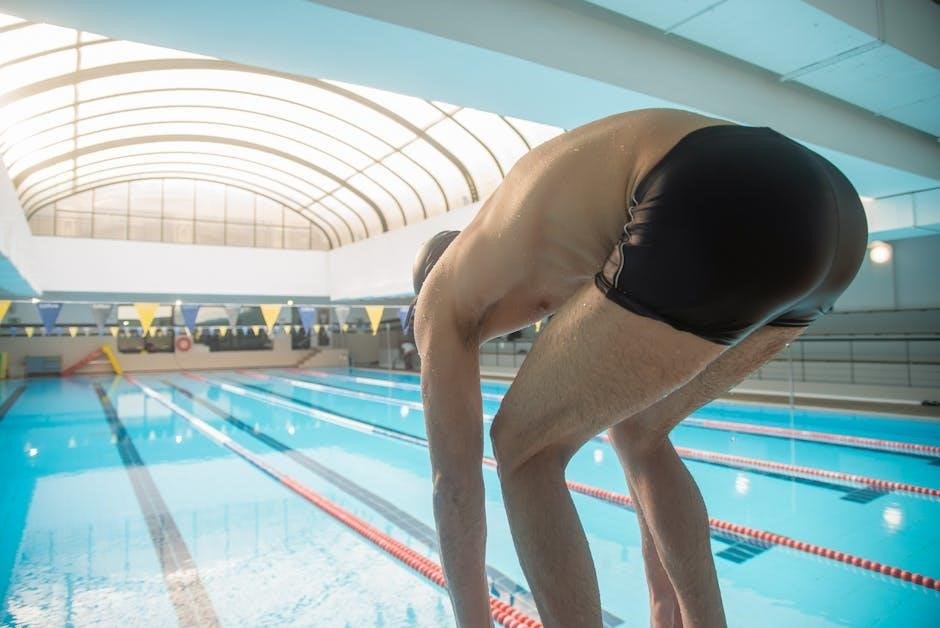
Resources and Further Information
PoolMath provides essential tools for maintaining optimal water chemistry. Physiopedia and ScienceDirect offer detailed insights into aquatic therapy and exercise techniques for back pain management.
Finding accessible pools is crucial for continued self-management, enabling long-term benefits from water-based exercise programs.
Finding Accessible Pools
Locating suitable pools is a vital step in implementing a consistent aquatic exercise program for lower back pain. Consider facilities offering accessible entry points, such as ramps or lifts, to accommodate varying mobility levels. Many leisure centers and community pools provide open swim times ideal for self-directed exercise routines.
Online resources can be invaluable in your search. Websites dedicated to disability access often list pool accessibility features. Contacting local parks and recreation departments can reveal options you might not find online. Don’t hesitate to inquire about water temperature, as warmer water can enhance muscle relaxation and comfort during exercises.
Prioritize pools with trained staff who can offer basic safety guidance. While not all staff may be experts in aquatic therapy, their presence provides an added layer of security. Remember, the goal is to find a safe and comfortable environment where you can consistently practice the exercises recommended by healthcare professionals, ultimately supporting your long-term back health and well-being.
Self-Management and Home Programs
Transitioning to self-management is a key goal of aquatic therapy for lower back pain. Once comfortable with the exercises, create a personalized program based on your assessed needs and limitations. Consistency is paramount; aim for regular sessions, even if brief, to maintain benefits.
Supplementing pool work with a home exercise program can amplify results. Simple stretches and core strengthening exercises performed on land reinforce the gains made in the water. Remember to listen to your body and avoid pushing through pain.
Utilize resources like the Physiopedia article to guide your program development. Regularly review and adjust your routine as your strength and flexibility improve. Self-monitoring pain levels and functional abilities will help you track progress and prevent setbacks. Empowering yourself with knowledge and proactive management is crucial for long-term back health and independence.
Sore lower back? Discover soothing pool exercises in our FREE PDF guide! Reduce pain & improve mobility with these easy-to-follow routines. Download now!