whitfield pellet stove manual

Whitfield Pellet Stove Manual: A Comprehensive Guide
Navigating the world of Whitfield pellet stoves requires a detailed manual, especially when considering used models with potential part replacements. Identifying your stove’s model and serial number—typically beginning with “WH—”—is crucial for locating the correct parts lists and ensuring optimal performance and longevity.
Understanding Your Whitfield Pellet Stove
Whitfield pellet stoves are renowned for their robust construction and heating efficiency, often outperforming big-box store alternatives due to thicker metal components in the firebox. However, maximizing their lifespan and performance hinges on understanding their operation and maintenance needs. A key aspect is recognizing that even well-maintained stoves, particularly used ones, will eventually require part replacements – auger motors and gaskets being common examples.
Before operation, thoroughly familiarize yourself with your specific model. Whitfield offers an “Advantage” series with variations (Advantage I vs. Advantage II) demanding distinct parts and considerations. Locating the model label, usually under the hopper lid, provides essential information – MAKE, MODEL, and SERIAL NUMBER – vital for accurate parts identification and accessing the correct manual. Proactive maintenance, including regular cleaning of both the stove and exhaust system, is paramount for sustained, reliable heating.
Model Identification & Serial Numbers
Accurate model identification is the cornerstone of successful Whitfield pellet stove ownership, particularly when sourcing replacement parts or consulting manuals; The “Advantage” series encompasses numerous models, necessitating precise identification to avoid compatibility issues. Begin by locating the model label, typically affixed to the underside of the hopper lid; This label clearly displays the MAKE, MODEL, and crucially, the SERIAL NUMBER.
Whitfield serial numbers generally follow the prefix “WH-”. Recording this information is essential; it allows you to download the correct parts list tailored to your specific stove. Ignoring this step can lead to purchasing incorrect components, causing delays and frustration. Remember, variations exist even within the Advantage I and Advantage II lines, emphasizing the importance of detailed identification before any repair or maintenance work is undertaken. Consult your owner’s manual for further clarification.
Locating the Model Label (Hopper Lid)

Finding the model label on your Whitfield pellet stove is a straightforward process, vital for identifying your specific unit. The label is consistently located on the underside of the hopper lid – the top-mounted compartment where you load the pellet fuel. Carefully lift the hopper lid to reveal the affixed label. This label contains critical information needed for maintenance, repairs, and ordering replacement parts.
Pay close attention to the details printed on the label. You’ll find the manufacturer’s name (Whitfield), the precise MODEL number, and the unique SERIAL number, which typically begins with “WH-”. Ensure the area is clean and well-lit for easy readability. Documenting this information is a proactive step towards ensuring the longevity and efficient operation of your Whitfield stove. This simple step unlocks access to the correct resources.
Decoding the Serial Number (WH-)
Understanding your Whitfield pellet stove’s serial number, which invariably starts with “WH-”, is paramount for accurate parts identification and accessing specific documentation. While the exact format following “WH-” can vary, it generally encodes manufacturing date and production sequence information. This allows Whitfield and parts suppliers to pinpoint the exact specifications of your stove.
The serial number isn’t simply a random string of characters; it’s a key to unlocking tailored support. When contacting customer service or ordering replacement components, having this number readily available ensures you receive the correct parts for your particular model and year of manufacture. It’s crucial to differentiate between the model number and the serial number – both are important, but the serial number provides a more granular level of detail. Accurate decoding streamlines the repair process and maximizes stove performance.
Operation & Maintenance
Consistent cleaning and proper pellet fuel selection are vital for optimal Whitfield stove performance. Regular vacuuming, seasonal exhaust maintenance, and hopper loading contribute to longevity.
Initial Setup and First-Time Use
Before igniting your Whitfield pellet stove for the first time, a thorough inspection is paramount. Ensure the stove is positioned according to local codes and manufacturer guidelines, with adequate clearance from combustible materials. Carefully review the owner’s manual for specific instructions related to your model – Advantage I or Advantage II variations may have slight differences.
Begin by verifying the hopper is clean and free of debris. Load the hopper with the recommended pellet fuel (see Pellet Fuel Recommendations section). Double-check all connections, including the exhaust system, to guarantee a secure and airtight seal. Familiarize yourself with the control panel functions before initiating the startup sequence.
During the initial burn, a slight odor may be present as the stove “breaks in.” This is normal. Monitor the stove closely during the first few cycles, observing the flame pattern and heat output. Allow the stove to run through several complete cycles to establish consistent operation. Always have a carbon monoxide detector installed and functioning nearby.
Pellet Fuel Recommendations
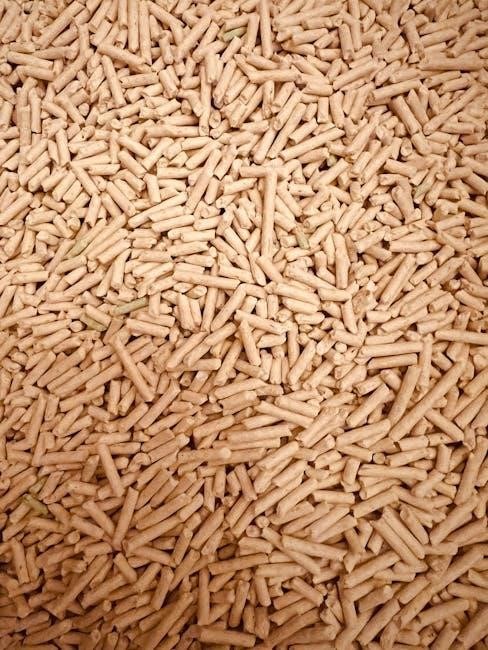
Whitfield pellet stoves are designed to operate most efficiently with high-quality, softwood pellets. Premium grade pellets, typically made from pine, fir, or spruce, offer superior heat output and minimal ash production. Avoid pellets containing excessive fines (dust) or moisture, as these can lead to operational issues and reduced efficiency.
While Whitfield stoves can burn hardwood pellets, they generally produce more ash and may require more frequent cleaning. Experimentation with different pellet brands is encouraged to find what works best for your specific stove and climate. Always store pellets in a dry, covered location to prevent moisture absorption.
Never use biomass fuels other than wood pellets, such as corn, wheat, or cherry pits, as these can damage the stove and void the warranty. Regularly inspect your pellet fuel for contaminants before loading the hopper, ensuring optimal combustion and longevity of your Whitfield stove.
Loading the Hopper Correctly
Properly loading the hopper is essential for consistent and reliable operation of your Whitfield pellet stove. Begin by ensuring the stove is completely cool and powered off before adding fuel. Gently pour pellets into the hopper, avoiding forceful dumping which can cause damage to the auger system.
Do not overfill the hopper; leave a few inches of space at the top to prevent bridging or jamming. Bridging occurs when pellets form a solid mass, obstructing the auger’s ability to deliver fuel to the burn pot. Regularly check the hopper level during operation, especially during extended burns.
Avoid introducing foreign objects into the hopper, such as debris or wood chunks, as these can cause significant damage. A consistent fuel supply ensures optimal performance and minimizes the need for frequent adjustments or troubleshooting.
Understanding Control Panel Functions
The Whitfield pellet stove control panel is your central hub for managing heat output and operational settings. Familiarize yourself with the power button, fan speed controls, and temperature adjustment options. Most models feature a digital display indicating stove status, hopper level, and any error codes that may arise.
Explore the auto-ignition settings, allowing the stove to automatically start and maintain the desired temperature. Understand the different heat settings – typically ranging from low to high – and how they impact fuel consumption and room heating capacity. Regularly check the control panel for any unusual readings or error messages.
Consult your specific model’s manual for a detailed explanation of all control panel functions and their corresponding settings, ensuring optimal and safe operation.

Troubleshooting Common Issues
Addressing issues like ignition failures, auger motor problems, or low heat output is vital for maintaining your Whitfield stove; understanding error codes is also key.
Stove Not Igniting
If your Whitfield pellet stove fails to ignite, several factors could be at play. First, ensure a consistent power supply to the unit, as the igniter requires electricity to function correctly. Check the pellet fuel itself; damp or low-quality pellets can hinder ignition. A clogged auger, preventing pellets from reaching the firepot, is another common culprit. Inspect the firepot for debris or ash buildup, which can smother the initial flame.
Furthermore, examine the igniter element for damage or breakage – a faulty igniter won’t produce the necessary spark. Verify the exhaust system is clear of obstructions, as proper airflow is essential for combustion. If the stove has an error code displayed, consult the manual to decipher its meaning, as it may pinpoint the exact issue. Finally, a malfunctioning high-limit switch can sometimes prevent ignition as a safety measure; ensure it hasn’t tripped unnecessarily.
Auger Motor Problems
Auger motor issues are frequently encountered with Whitfield pellet stoves, particularly in older, used models. A common symptom is the stove failing to feed pellets, resulting in a weak or nonexistent flame. Listen for unusual noises – grinding or clicking sounds often indicate a failing motor or jammed auger. Inspect the auger itself for physical damage, such as bent flights or obstructions caused by foreign objects.
Low voltage can also contribute to auger motor problems, so verify the power supply. If the motor runs intermittently, a loose electrical connection might be the cause. Replacing the auger motor is often necessary, and sourcing the correct part based on your stove’s model number is crucial. Remember that preventative maintenance, including regular cleaning, can extend the life of the auger motor and minimize the risk of failure. Consider the age of the stove when evaluating repair costs.
Low Heat Output
Experiencing reduced heat from your Whitfield pellet stove can stem from several factors. Insufficient pellet supply is a primary concern; ensure the hopper is adequately filled and the auger is functioning correctly to deliver fuel to the burn pot. Check for obstructions in the exhaust system – soot buildup restricts airflow, diminishing heating efficiency. A clogged air intake can also limit combustion.
The quality of the pellet fuel itself plays a role; low-grade pellets produce less heat. Verify the stove’s settings are appropriate for your heating needs and the ambient temperature. Regularly cleaning the stove, including the burn pot and heat exchanger, is vital for maintaining optimal performance. If issues persist, consider a professional inspection to rule out more complex problems like a failing blower motor or damaged internal components.
Error Codes and Their Meanings
Whitfield pellet stoves utilize error codes to diagnose operational issues, providing valuable insights for troubleshooting. While specific codes vary by model (Advantage I vs. Advantage II), understanding their general implications is key. A common error might indicate an auger motor malfunction, preventing pellet delivery. Others signal issues with the blower motor, temperature sensors, or exhaust system.

Consult your stove’s specific manual for a comprehensive list of error codes and their corresponding solutions. Ignoring error codes can lead to further damage or reduced efficiency. Often, a simple reset can resolve temporary glitches, but persistent codes require investigation. If you’re unable to decipher the code or implement the recommended fix, contacting a qualified technician is advisable to prevent potential safety hazards or costly repairs.
Parts & Repair
Sourcing replacement parts for your Whitfield stove is simplified by identifying the model via the hopper lid label and serial number (WH-). Parts lists are readily available online.
Finding Replacement Parts
Locating replacement parts for your Whitfield pellet stove begins with accurate model identification. The model and serial number, usually found under the hopper lid, are essential for ensuring compatibility. The serial number typically starts with “WH-”. Once identified, downloadable parts lists specific to your Whitfield Advantage series stove become available online.
These lists detail every component, streamlining the repair process. Several online retailers specialize in pellet stove parts, offering a wide selection of items like gaskets, auger motors, and more. When ordering, double-check the part number against your stove’s specific model to avoid errors. Consider exploring used stove marketplaces as a source for potentially cheaper, yet functional, parts. Remember to consult your owner’s manual before undertaking any repairs, and prioritize safety when working with heating appliances.
Whitfield Advantage Series Parts Lists
Whitfield pellet stoves, particularly the Advantage series, benefit from readily available, detailed parts lists. These lists are crucial for both routine maintenance and more complex repairs, ensuring your stove operates efficiently and safely. Finding the correct list requires knowing your specific model number, typically located on a label under the hopper lid, alongside the serial number which begins with “WH-”.
Once identified, you can download a comprehensive parts diagram outlining every component, from the auger motor to individual gaskets. These diagrams often include part numbers, simplifying the ordering process. Online retailers specializing in pellet stove parts frequently utilize these lists to help customers find the correct replacements. Utilizing these resources empowers owners to perform self-repairs, extending the lifespan of their Whitfield stove and avoiding costly service calls.
Advantage I vs. Advantage II – Key Differences
When considering a Whitfield Advantage pellet stove, understanding the distinctions between the Advantage I and Advantage II models is vital for parts sourcing and repair procedures. While both offer reliable heating, subtle yet significant differences exist in their components and designs. The Advantage II generally incorporates improvements based on user feedback and advancements in manufacturing techniques.
These improvements often include a more robust auger motor, enhanced gasket materials for tighter seals, and potentially a redesigned firepot for more efficient combustion. Because of these changes, parts are not always interchangeable between the two models. Always consult your owner’s manual or a detailed parts list specific to your stove’s version before ordering replacements. Ignoring this can lead to compatibility issues and hinder proper operation.
Common Parts Requiring Replacement (Gaskets, Auger Motor)
Whitfield pellet stoves, like all heating appliances, require periodic part replacements to maintain peak performance and efficiency. Two components frequently needing attention are the gaskets and the auger motor. Gaskets, responsible for airtight seals around doors and access points, degrade over time due to heat exposure and wear, leading to reduced heating efficiency and potential smoke leakage. Regular inspection and replacement are crucial.
The auger motor, which feeds pellets from the hopper to the firepot, is another common failure point, especially in older stoves or those used extensively. Signs of a failing auger motor include difficulty igniting, inconsistent pellet feed, or unusual noises. Proactive replacement prevents complete system failure. Prioritize genuine Whitfield replacement parts to ensure compatibility and optimal functionality, referencing your stove’s model number for accurate selection.

Long-Term Stove Health
Whitfield stoves boast impressive longevity, with some exceeding 20 years with proper care. Regular cleaning, preventative maintenance, and timely part replacements are key to sustained operation.
Expected Lifespan of Whitfield Stoves
Determining the expected lifespan of a Whitfield pellet stove is multifaceted, heavily influenced by usage frequency, maintenance diligence, and the quality of initial construction. However, Whitfield stoves generally enjoy a reputation for durability exceeding that of many big-box store alternatives, often utilizing thicker metals in critical firebox components.
Reports suggest well-maintained Whitfield stoves can operate effectively for two decades or more. One user shared experience with a stove exceeding 20 years, while another noted a ten-year-old unit requiring only an auger motor and gasket replacement.
Investing in a used Whitfield can be a cost-effective strategy, but thorough inspection and potential part replacement should be factored into the budget; Prioritizing regular cleaning—both seasonal deep cleans and frequent vacuuming during operation—significantly extends the stove’s functional life. Ultimately, proactive maintenance is the strongest predictor of a long and reliable service life.
Benefits of Buying Used Whitfield Stoves
Opting for a used Whitfield pellet stove presents several compelling advantages, primarily centered around cost savings. Compared to purchasing a new unit, a pre-owned stove can represent a substantial financial benefit, allowing allocation of funds towards essential maintenance or upgrades. However, careful consideration is paramount.
Whitfield stoves, known for their robust construction, often maintain functionality for many years, even with prior use. A used stove may already have undergone initial wear and tear, potentially revealing early signs of component fatigue.
Successful acquisition hinges on diligent inspection, focusing on critical parts like the auger motor and gaskets. Budgeting for potential replacements is prudent. Locating the model and serial number (prefixed with “WH-”) is vital for sourcing compatible parts. Ultimately, a well-chosen used Whitfield offers a balance of affordability and reliable heating.
Regular Cleaning Schedule (Seasonal & Daily)
Maintaining peak performance of your Whitfield pellet stove necessitates a consistent cleaning regimen, encompassing both daily and seasonal tasks. Daily upkeep involves briefly shutting down the stove when cooled to vacuum accumulated ash, ensuring efficient operation and preventing potential issues. This simple step, performed every 4-5 days during active heating, significantly reduces buildup.
A comprehensive seasonal cleaning, ideally before the heating season begins, is crucial. This includes a thorough inspection and cleaning of the entire stove, paying particular attention to the exhaust system. Removing creosote buildup within the exhaust is paramount for safety and optimal draft.

Regular cleaning extends the lifespan of your Whitfield stove and maintains its heating efficiency. Consistent attention to these details will minimize the need for costly repairs and ensure years of reliable warmth.
Exhaust System Maintenance
The exhaust system is a critical component of your Whitfield pellet stove, demanding regular attention to ensure safe and efficient operation. Creosote buildup, a natural byproduct of combustion, can accumulate within the venting pipes, posing a significant fire hazard and restricting airflow.
A thorough seasonal inspection of the entire exhaust system is essential. This includes checking for any signs of corrosion, damage, or blockages. Removing creosote buildup is paramount; professional chimney sweeping is highly recommended, especially if you notice substantial accumulation.
Properly maintained venting ensures optimal draft, maximizing heat output and minimizing the risk of carbon monoxide poisoning. Regular inspections and cleaning contribute significantly to the longevity and safety of your Whitfield pellet stove, providing peace of mind throughout the heating season.
Preventative Maintenance Tips
Proactive maintenance extends the life of your Whitfield pellet stove and ensures consistent, reliable heating. Beyond seasonal cleaning, incorporating small, regular checks into your routine can prevent costly repairs down the line.
Vacuuming the firebox every 4-5 days, while the stove is cool, removes ash buildup and maintains efficient combustion. Regularly inspect and tighten any loose screws or connections. Monitor pellet levels and ensure a consistent fuel supply. Addressing minor issues promptly prevents them from escalating into major problems.
Consider the age of components like gaskets and the auger motor; being prepared for potential replacements is wise, especially with older stoves. A well-maintained Whitfield stove offers years of dependable warmth, making preventative care a worthwhile investment.
Need a Whitfield pellet stove manual? We’ve got you covered! Download PDF guides for all models & get back to cozy warmth. Easy access & free downloads!