timeline of jesus life pdf
Establishing a precise timeline for Jesus’ life remains a complex undertaking, hindered by limited contemporary sources and scholarly debate. ResearchGate’s resource, though temporarily unavailable, highlights this ongoing pursuit, aiming to reconstruct events within a historical framework.
A. Importance of Establishing a Chronology
A robust chronology of Jesus’ life is paramount for several reasons, bridging faith and historical understanding. It allows for contextualizing his teachings and miracles within the socio-political realities of first-century Judea, as explored in resources like those found on ResearchGate.
Furthermore, a timeline aids in harmonizing Gospel accounts, addressing apparent discrepancies, and providing a framework for theological interpretation. Understanding the timing of events—like the census of Quirinius—impacts interpretations of his birth and early life. Establishing a reliable sequence enhances our comprehension of Jesus’ ministry, passion, and resurrection, offering a more nuanced and informed perspective on his significance.
B. Challenges in Dating Events in Jesus’ Life
Dating events in Jesus’ life presents significant challenges due to the scarcity of contemporary, non-biblical sources. The Gospels, while spiritually vital, weren’t primarily intended as strict historical chronologies, leading to interpretive difficulties. Resources like those briefly accessible on ResearchGate demonstrate the complexities involved.
Pinpointing the exact year of Jesus’ birth remains debated, as does correlating Gospel narratives with known Roman administrative events, such as the census. Reconciling differing accounts and accounting for potential symbolic or theological structuring within the texts further complicates the process, requiring careful scholarly analysis and cautious conclusions.
C. Sources Used for Reconstruction (Gospels, Historical Context)
Reconstructing a Jesus timeline relies heavily on the four Gospels – Matthew, Mark, Luke, and John – as primary narrative sources. However, these texts are theological interpretations alongside historical accounts, necessitating careful consideration. Complementary sources include Roman historical writings, offering context regarding Judea’s political landscape under Roman rule, as briefly indicated by resources like ResearchGate.
Archaeological findings and understanding of first-century Jewish customs and religious sects (Pharisees, Sadducees) also contribute. Establishing a robust chronology demands integrating biblical data with external historical evidence, acknowledging potential biases and interpretive challenges inherent in each source.

II. The Historical and Political Landscape
Judea existed under Roman authority during Jesus’ life, marked by figures like Herod the Great and the census under Quirinius, shaping the era’s context.
A. Roman Rule in Judea (Herod the Great, Census of Quirinius)
The political climate of Judea during Jesus’ lifetime was profoundly shaped by Roman dominion. Herod the Great, appointed King of the Jews by Rome, ruled with a complex blend of ambition and brutality, undertaking massive building projects like the expansion of the Second Temple in Jerusalem. His reign, though marked by internal strife, provided a period of relative stability.
Crucially, the Census of Quirinius, conducted around 6-7 AD, is often cited as a key chronological marker. This census, ordered by the Roman Emperor Augustus, aimed to register the population for taxation purposes. Its timing is debated, but it’s frequently linked to the birth of Jesus, as it prompted Joseph and Mary to travel to Bethlehem – Joseph’s ancestral home – for registration.
B. Jewish Religious Sects (Pharisees, Sadducees, Essenes, Zealots)
First-century Judea was a vibrant tapestry of religious thought, dominated by several distinct sects. The Pharisees, emphasizing oral law and personal piety, believed in resurrection and an afterlife, frequently clashing with Jesus over interpretations of religious practice. The Sadducees, largely aristocratic and tied to the Temple, rejected these beliefs.
The Essenes, known for their ascetic lifestyle and apocalyptic beliefs, are often associated with the Dead Sea Scrolls. Finally, the Zealots advocated for armed rebellion against Roman rule, representing a more radical political stance. Understanding these groups is vital, as Jesus interacted with and debated members of each, shaping the context of his ministry.
C. The Temple in Jerusalem and its Significance
The Temple in Jerusalem stood as the central religious and national symbol for the Jewish people. Herod the Great initiated a massive expansion project, begun around 20 BCE, which continued throughout Jesus’ lifetime, demonstrating Roman power and Jewish religious devotion. It served as the focal point for sacrifices, festivals, and daily worship.
For Jesus, the Temple represented both spiritual authority and corruption. His dramatic cleansing of the Temple, recounted in the Gospels, challenged its commercialization and highlighted his prophetic message. The Temple’s eventual destruction in 70 CE marked a pivotal moment in Jewish history, forever altering religious practice.
III. The Birth and Early Childhood of Jesus
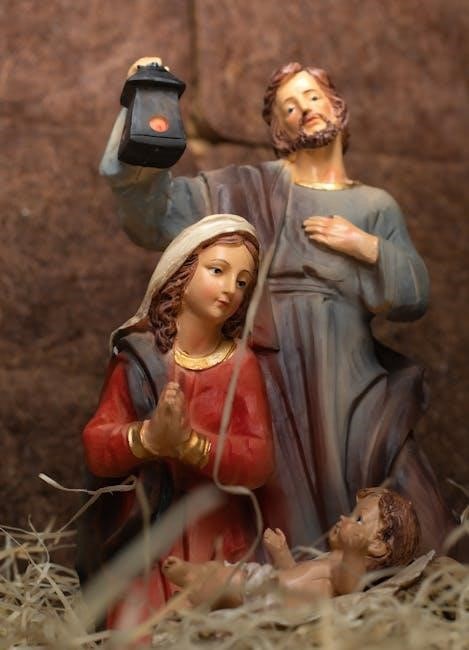
The narrative surrounding Jesus’ birth, including the Annunciation and Bethlehem nativity, sets the stage for his earthly life. Determining an approximate birth date remains a scholarly challenge.
A. The Annunciation and the Virgin Birth
The Annunciation, as recounted in the Gospel of Luke, details the angel Gabriel’s appearance to Mary, informing her she would conceive and bear a son, Jesus, through the Holy Spirit. This miraculous event establishes the foundational belief in the Virgin Birth, central to Christian theology.
The narrative emphasizes Mary’s humble acceptance of God’s will, despite the societal implications of bearing a child outside of marriage. This pivotal moment marks the beginning of the fulfillment of Old Testament prophecies concerning the Messiah. The Annunciation isn’t precisely datable, but its placement within the narrative sets the stage for the subsequent events leading to Jesus’ birth in Bethlehem.
B. The Birth of Jesus in Bethlehem (Approximate Date)
Determining the precise year of Jesus’ birth remains a subject of scholarly debate, with estimates generally placing it between 6 BC and 4 BC. This range stems from attempts to correlate the biblical narrative with historical events, particularly the reign of Herod the Great, who died in 4 BC.
The Gospel of Matthew connects Jesus’ birth to Herod’s reign, suggesting it occurred before his death. Bethlehem is identified as the birthplace, fulfilling Old Testament prophecies. While a definitive date is elusive, the consensus points to a birth within this timeframe, initiating the unfolding of God’s redemptive plan.
C. The Visit of the Magi and the Flight to Egypt
Following Jesus’ birth, the Gospel of Matthew recounts the visit of the Magi – wise men from the East – guided by a star to Bethlehem. They presented gifts of gold, frankincense, and myrrh, recognizing Jesus as the newborn King of the Jews.
This event alarmed Herod the Great, who, fearing a rival, ordered the “Massacre of the Innocents.” To protect Jesus, Joseph and Mary fled to Egypt, remaining there until Herod’s death. This flight fulfilled Old Testament prophecy, showcasing God’s providential care and protection over His Son.
D. Early Life in Nazareth (Limited Biblical Details)
After their return from Egypt, Joseph and Mary settled in Nazareth, a small town in Galilee. The Gospels provide remarkably few details about Jesus’ childhood and adolescence in Nazareth. Luke mentions a single incident – Jesus remaining behind in the Temple during a pilgrimage to Jerusalem at age twelve – demonstrating early devotion and understanding.
The intervening years, often referred to as the “Silent Years,” remain largely unknown. It’s presumed Jesus learned carpentry from Joseph and grew in wisdom, stature, and favor with God and man, preparing for His future ministry.
IV. The Ministry of John the Baptist
John the Baptist’s ministry, preaching repentance and baptizing at the Jordan River, paved the way for Jesus. His actions prepared the spiritual landscape for the Messiah’s arrival.
A. John’s Preaching and Baptism at the Jordan River
John the Baptist emerged as a pivotal figure, actively preaching a message of repentance and imminent divine judgment in the wilderness of Judea. He called for a turning away from sin and a preparation for the coming Messiah, drawing large crowds to the Jordan River.
Central to his ministry was the practice of baptism – a symbolic washing signifying purification and a commitment to a new life. This ritual act wasn’t merely ceremonial; it represented a public declaration of faith and a willingness to embrace God’s forgiveness. John’s powerful sermons and the compelling nature of his baptism resonated deeply with the people, creating a spiritual awakening and setting the stage for Jesus’ public ministry.
B. Jesus’ Baptism by John the Baptist
The baptism of Jesus by John the Baptist marks a crucial turning point in the Gospels, signifying the beginning of Jesus’ public ministry. Despite John’s initial reluctance, recognizing Jesus’ superior status, Jesus insisted on being baptized “to fulfill all righteousness.”
During this pivotal moment, the heavens opened, and the Holy Spirit descended upon Jesus in the form of a dove, accompanied by a voice from heaven declaring, “You are my beloved Son, with whom I am well pleased.” This divine affirmation validated Jesus’ identity and mission, publicly acknowledging Him as the Messiah and empowering Him for the work ahead.
C. The Temptation of Jesus in the Wilderness
Following His baptism, Jesus was led by the Spirit into the wilderness, where He endured a forty-day fast and was subjected to intense temptation by Satan. These trials aimed to undermine Jesus’ commitment to God and His divine mission, testing His obedience and faith under extreme duress.
Satan presented Jesus with three distinct temptations: turning stones into bread to satisfy His hunger, testing God’s promises by leaping from the temple, and gaining worldly power by worshipping Satan. Jesus consistently resisted each temptation, relying on Scripture and unwavering devotion to His Father, demonstrating His perfect righteousness and unwavering resolve.

V. Jesus’ Public Ministry in Galilee
Jesus initiated His public ministry in Galilee, centered around Capernaum, attracting disciples and performing miracles that showcased God’s power and compassion.
A. Early Ministry in Capernaum (Calling of Disciples)
Capernaum served as a pivotal base for Jesus’ early Galilean ministry, becoming a hub for His teachings and miraculous deeds. It was here, near the Sea of Galilee, that He began to gather His core group of disciples, transforming ordinary fishermen into His devoted followers.
The calling of Simon (Peter) and Andrew, along with James and John, marked a turning point, signifying the formation of a dedicated team to spread His message. These initial encounters weren’t merely requests for assistance, but invitations to a life of profound purpose and spiritual transformation. Capernaum witnessed the beginnings of a movement that would reshape the world.
B. Miracles and Teachings in Galilee (Healing, Exorcisms, Parables)
Throughout Galilee, Jesus demonstrated the power of God through numerous miracles, captivating crowds and challenging conventional understanding. Healings of the sick, casting out demons, and restoring sight to the blind weren’t isolated events, but powerful displays of divine compassion and authority.
Alongside these miraculous acts, Jesus employed parables – simple yet profound stories – to convey complex spiritual truths. These narratives, like the Good Samaritan and the Prodigal Son, resonated deeply with His audience, offering insights into the Kingdom of God and the nature of faith.
C. The Sermon on the Mount (Key Teachings)
The Sermon on the Mount represents a cornerstone of Jesus’ ethical and spiritual teachings, delivered to a large gathering of disciples and onlookers. This profound discourse, found in Matthew chapters 5-7, outlines principles for righteous living, challenging conventional interpretations of the Law.
Central to the sermon are the Beatitudes – blessings pronounced on those possessing qualities like humility, meekness, and a hunger for righteousness. Jesus also emphasized the importance of inner motives, advocating for a higher standard of morality than outward observance alone. It’s a foundational text for Christian ethics.
VI. Increasing Opposition and Journey to Jerusalem
As Jesus’ popularity grew, so did opposition from religious leaders, prompting a deliberate journey towards Jerusalem and its inevitable confrontation.
A. Growing Conflict with Religious Leaders
The escalating tensions between Jesus and the Pharisees, Sadducees, and scribes stemmed from differing interpretations of Jewish law and tradition. Jesus challenged their authority by healing on the Sabbath, associating with outcasts, and proclaiming a new covenant based on grace rather than strict adherence to ritualistic practices.
These actions were perceived as blasphemous and a threat to their established power structure. Public debates and accusations of heresy became increasingly frequent, fueling the animosity. The religious leaders began plotting to discredit and ultimately eliminate Jesus, viewing him as a dangerous influence undermining their control over the people and the Temple.
B. The Transfiguration of Jesus
The Transfiguration, a pivotal event in Jesus’ ministry, occurred as He ascended a high mountain with Peter, James, and John. Before them, Jesus was gloriously transformed, his face radiating divine light, and his clothes becoming brilliantly white.
Moses and Elijah appeared, conversing with Jesus, symbolizing the fulfillment of the Law and the Prophets. A bright cloud enveloped them, and a voice from heaven declared, “This is my beloved Son, with whom I am well pleased.” This miraculous display affirmed Jesus’ divine identity and foreshadowed his future glory, strengthening the disciples’ faith.
C. The Raising of Lazarus and its Consequences
The raising of Lazarus from the dead, a profoundly significant miracle, dramatically escalated opposition to Jesus from religious authorities. Learning of Lazarus’ illness, Jesus deliberately delayed his return to Bethany, intending to demonstrate God’s power over death.
Upon arriving, Jesus commanded Lazarus to come forth from the tomb, and he miraculously obeyed, still wrapped in burial cloths. This event, witnessed by many, fueled the growing animosity of the chief priests and Pharisees, who feared Jesus’ increasing influence and perceived him as a threat to their authority, ultimately plotting his demise.
VII. The Final Week in Jerusalem (Passion Week)
Jesus’ final week, known as Passion Week, was filled with pivotal events, including his triumphant entry and confrontations with religious leaders, leading to his crucifixion.
A. The Triumphal Entry into Jerusalem
The Triumphal Entry marks Jesus’ dramatic arrival in Jerusalem during the final week of his life, a moment steeped in prophetic significance. Riding on a donkey, fulfilling Zechariah’s prophecy, Jesus was greeted by enthusiastic crowds who spread their cloaks and palm branches along the road, hailing him as the Messiah and King of Israel.
This public display of adoration directly challenged the Roman authorities and deeply angered the religious leaders, setting the stage for the escalating conflict that would culminate in his arrest and crucifixion. The event, occurring shortly before Passover, symbolized Jesus’ claim to kingship and his impending sacrifice for the salvation of humanity.
B. Cleansing of the Temple
Immediately following his Triumphal Entry, Jesus boldly confronted the commercial activities within the Temple courts, an act known as the Cleansing of the Temple. He drove out the money changers and merchants who were profiting from religious worship, overturning their tables and declaring the Temple a house of prayer, not a den of robbers.
This dramatic demonstration of righteous indignation further inflamed the opposition of the chief priests and scribes, who saw it as a direct threat to their authority and financial interests. The event underscored Jesus’ commitment to spiritual purity and his challenge to the corruption within the religious establishment.
C. The Last Supper and the Institution of the Eucharist
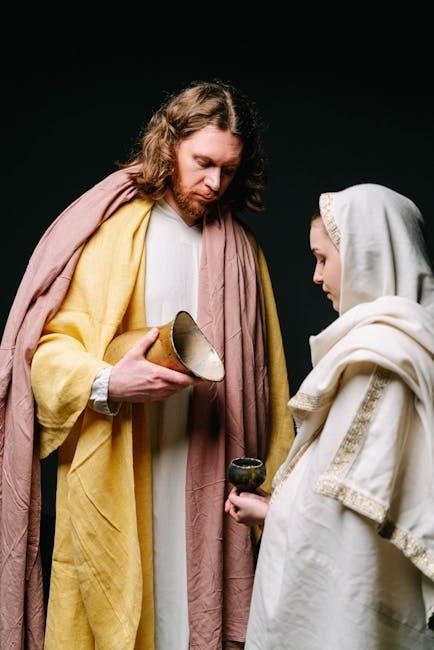
Jesus shared a final meal with his disciples, now known as the Last Supper, during the Passover celebration in Jerusalem. This intimate gathering marked a pivotal moment, as Jesus instituted the Eucharist, or Holy Communion, commanding them to continue the practice in remembrance of him.
He broke bread and shared wine, symbolizing his body and blood, which would be sacrificed for the forgiveness of sins. This act foreshadowed his impending death and established a lasting covenant with his followers, solidifying their spiritual connection and faith.

VIII. The Crucifixion and Burial
Jesus’ crucifixion at Golgotha, a horrific public execution, occurred around 30-33 AD. Following his death, his body was swiftly buried in a tomb, awaiting the dawn.
A. Jesus’ Arrest in the Garden of Gethsemane
Following the Last Supper, Jesus retreated with his disciples to the Garden of Gethsemane to pray, anticipating the immense suffering ahead. This tranquil setting became the scene of betrayal as Judas Iscariot, motivated by greed, led a contingent of temple guards and Roman soldiers to identify Jesus.
The arrest wasn’t a quiet capture; it involved a struggle, with one of Jesus’ disciples even attempting to defend him with a sword, resulting in a servant’s ear being severed. Despite the resistance, Jesus willingly submitted to arrest, knowing it fulfilled prophecy. This pivotal moment marked the beginning of his trials and ultimately, his crucifixion, as documented in the Gospels and explored within detailed timelines of his life.
B. Trials Before Pilate and Herod
After his arrest, Jesus was first brought before Annas, then Caiaphas, the Jewish high priest, facing accusations of blasphemy. Seeking to condemn Jesus, the Sanhedrin lacked the authority to execute him under Roman law, necessitating a trial before Pontius Pilate, the Roman prefect of Judea.
Pilate, finding no substantial evidence of wrongdoing, attempted to pass responsibility to Herod Antipas, the tetrarch of Galilee, as Jesus was a Galilean. Herod, however, sent Jesus back to Pilate. Ultimately, pressured by the escalating demands of the crowd, Pilate reluctantly yielded and sentenced Jesus to crucifixion, despite his own doubts about Jesus’ guilt, fulfilling the timeline of events.
C. The Crucifixion at Golgotha (Approximate Date)
The crucifixion of Jesus occurred on a Friday, traditionally believed to be around 30-33 AD, though precise dating remains debated among scholars. This execution took place at Golgotha (Calvary), a site outside Jerusalem, meaning “place of the skull.”
Jesus endured immense physical suffering, nailed to a cross between two criminals. The Gospels detail the events surrounding his death, including darkness falling over the land and the veil of the Temple being torn. His final words, and subsequent death, marked a pivotal moment in Christian belief, aligning with the established timeline of his life and ministry.
D. Burial in the Tomb
Following Jesus’ crucifixion, his body was taken down from the cross and prepared for burial by Joseph of Arimathea, a wealthy disciple. He secured permission from Pontius Pilate to bury Jesus in his own new tomb, hewn out of rock, located nearby Golgotha.
Nicodemus assisted with the burial, bringing a mixture of myrrh and aloes—around seventy-five pounds—to anoint the body. The body was then wrapped in linen cloths, as was the Jewish custom, and laid within the tomb before a large stone was rolled to seal the entrance, marking the end of this phase in the established timeline.
IX. The Resurrection and Ascension
The discovery of the empty tomb initiated accounts of Jesus’ resurrection, followed by appearances to disciples. This culminated in the Great Commission and his ascension.
A; The Discovery of the Empty Tomb
The narrative of the empty tomb forms the cornerstone of the resurrection accounts, detailed within the Gospels. Early on the first day of the week, several women, including Mary Magdalene, ventured to the tomb to anoint Jesus’ body with spices, only to find the stone rolled away.
Initial reactions were marked by confusion and fear, prompting them to alert the disciples. The discovery sparked immediate investigation, with Peter and John rushing to the tomb to confirm the astonishing reality – the body of Jesus was no longer present. This pivotal event, though subject to varying interpretations, fundamentally altered the course of early Christian belief and became central to their proclamation.
B. Appearances of the Resurrected Jesus
Following the discovery of the empty tomb, the Gospels recount a series of appearances of the resurrected Jesus to his disciples and others. Mary Magdalene is traditionally identified as the first witness, encountering Jesus in the garden near the tomb.
Subsequent appearances included encounters with Peter, the disciples gathered in a locked room, and a larger group of over five hundred believers. These post-resurrection appearances served as tangible proof of Jesus’ victory over death, solidifying faith and empowering the disciples to spread the message of salvation. These events are foundational to Christian theology.
C. The Great Commission and the Ascension
Prior to his ascension, Jesus delivered the Great Commission to his disciples, instructing them to go and make disciples of all nations. This mandate emphasized baptizing them in the name of the Father, Son, and Holy Spirit, and teaching them to obey all his commands.
Following this directive, the Gospels describe Jesus’ ascension into heaven, witnessed by his disciples. This event marked the completion of his earthly ministry and his return to the Father, signifying his ongoing reign and intercession for believers. It’s a pivotal moment in Christian belief.
Dive into the life of Jesus with our detailed, easy-to-follow timeline PDF! From birth to resurrection, understand the key events & teachings. Download now!